

What if the greatest threat to your financial transformation isn't the complexity of the code, but the silent return to a localized spreadsheet? Many CFOs face the recurring frustration of investing in premium platforms only to watch their teams revert to manual workarounds. Implementing effective user adoption strategies for fpa software is the only way to move beyond this cycle and secure a true return on your investment. It's about shifting from a tool-centric mindset to a visionary approach that prioritizes precision and human experience.
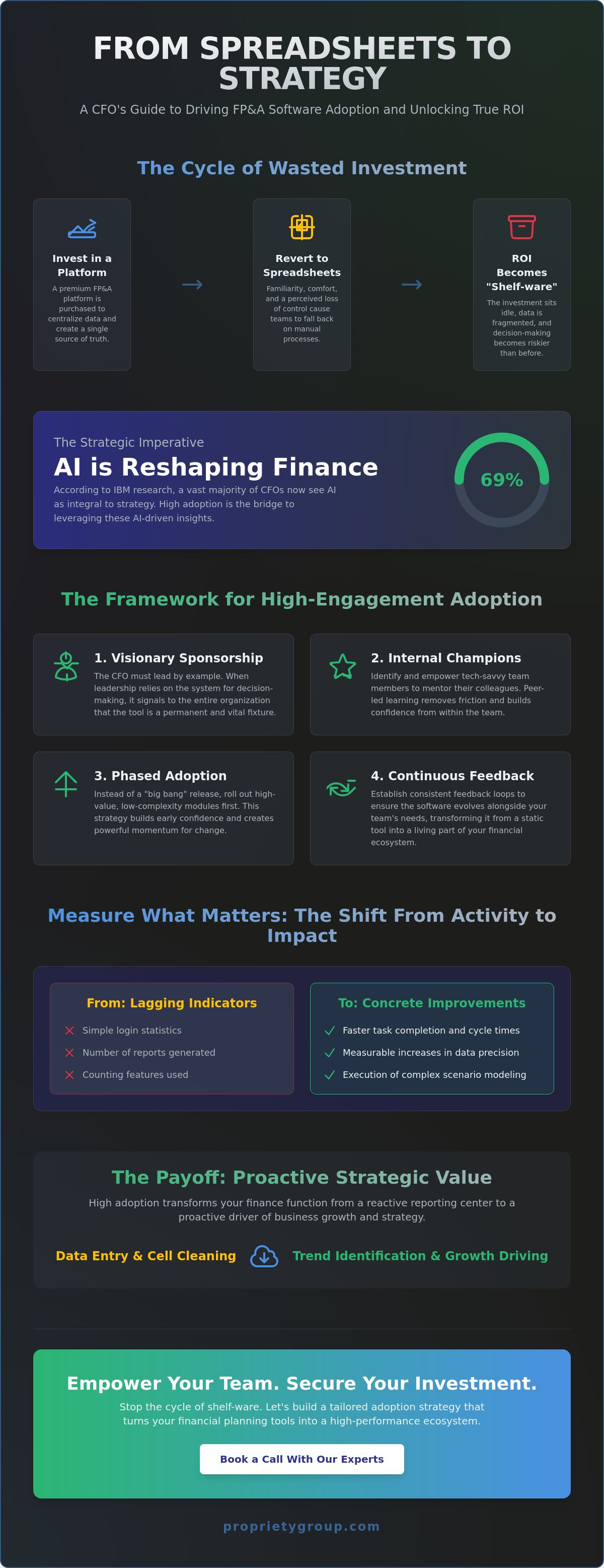
You likely recognize that your team is already at capacity, and the thought of another retraining cycle feels like a drain on valuable time. We promise to show you how to transform your financial planning tools into a high-performance ecosystem that empowers your staff rather than burdening them. Adoption is the bridge to that future. According to 2026 IBM research, 69% of CFOs now see AI as integral to their strategy. This guide outlines how to achieve a single source of truth and leverage these AI-driven insights for more confident decision-making. We'll explore the move from static reporting to continuous, driver-based planning that creates lasting value for the entire organization.
Key Takeaways
- Understand the psychological barriers that keep teams tethered to spreadsheets and learn how to align daily habits with a more sophisticated digital ecosystem.
- Discover how to implement user adoption strategies for fpa software by securing visionary sponsorship that leads by example at the executive level.
- Learn how to identify and empower internal champions to foster a peer-led environment that reduces resistance and builds long-term confidence.
- Transition your measurement of success from simple login statistics to concrete improvements in task speed and data precision.
- Explore how high engagement directly empowers your finance team to execute complex scenario modeling that drives strategic business value.
Why Finance Teams Resist Change: The Psychological Barrier to New Software
A successful user adoption strategy for FP&A software is rarely about the technical specifications of the platform. Instead, it's an intentional process of aligning a team’s daily habits with a new digital ecosystem. For many finance professionals, spreadsheets represent more than just a tool; they are a source of comfort and absolute control. This "Excel addiction" often stems from the perceived risk of losing autonomy when moving to a centralized platform. Without a clear understanding of the "why" behind the change, even the most advanced systems can feel like a burden rather than a benefit.
To understand why teams hesitate, we can look at the Technology Acceptance Model, which highlights how perceived usefulness and ease of use dictate whether a person embraces new systems. When users don't see how a tool makes their individual roles more impactful, they naturally revert to what they know. We shouldn't view software as a replacement for human expertise. It's a refined instrument for financial craftsmanship that requires a shift in perspective to master.
To better understand the mechanics of engagement, watch this helpful video:
The Cost of "Shelf-ware" in Financial Planning
Buying licenses is only the first step toward transformation. When teams continue to work offline in siloed spreadsheets, the business suffers from the hidden drain of "shelf-ware." This occurs when expensive investments sit idle while data remains fragmented across various desktops. This fragmentation compromises the single source of truth, leading to inconsistent reports and risky decision-making. True precision is lost when the digital environment doesn't reflect the team's operational reality.
Moving from Reactive to Proactive Planning
Comprehensive user adoption strategies for fpa software move the needle from reactive data entry to proactive strategic analysis. Instead of spending hours cleaning cells, your team focuses on identifying trends and driving growth. This shift is a core component of EPM advisory. It provides the situational framing necessary to turn a technical tool into a visionary asset that supports long-term security. By implementing robust user adoption strategies for fpa software, you ensure the technology serves the human experience rather than complicating it.
To ensure your software investment delivers enduring value and to discuss a tailored approach for your organization, book a call with our team today.
Strategic Frameworks for Driving High-Engagement Adoption
Transitioning from manual processes to a unified digital environment requires more than a technical rollout; it demands a structured framework that respects the human element of finance. Successful user adoption strategies for fpa software are built on the foundation of visionary sponsorship. The CFO must lead this transformation by integrating the software’s outputs into every high-level meeting. When leadership relies on the system for decision-making, it signals that the tool is a permanent fixture of the firm's craftsmanship. This approach is essential for Winning Over Your Organization and ensuring long-term commitment.
Engagement thrives when it's peer-led. Identifying "Internal Champions" allows tech-savvy team members to mentor their colleagues, which removes the friction often felt during external implementations. We recommend a phased adoption approach rather than a "Big Bang" release. By rolling out high-value, low-complexity modules first, you build early confidence and momentum. Finally, establishing consistent feedback loops ensures the software evolves alongside your team's needs, rather than remaining a static, forgotten tool. If you're looking to refine your digital ecosystem, you might speak with our advisory team about these advanced frameworks.
The Role of AI in Modern Onboarding
As we move through 2026, financial AI solutions are revolutionizing how teams learn new systems. Modern platforms now offer real-time, in-app guidance that provides immediate support during complex tasks. Predictive analytics can even identify when a user is struggling with a specific workflow, allowing for proactive intervention before frustration sets in. This intelligent support layer transforms the onboarding experience from a hurdle into a guided journey that feels intuitive and supportive.
Tailoring Training to Finance Personas
Generic vendor webinars rarely meet the diverse needs of a modern finance department. A "Power User" responsible for complex modeling requires a different depth of knowledge than a "Casual User" who simply manages a department budget. Bespoke workshops that address these specific personas ensure that training remains relevant and impactful. This tailored approach respects the professional time of your staff while building the specialized skills necessary for financial excellence.
Measuring the Dividends of Adoption and the Value of Advisory
True success in digital transformation is measured by the precision of the results, not the frequency of the logins. While basic metrics might show that a team is accessing a platform, they fail to capture whether that team is truly mastering it. Refined user adoption strategies for fpa software focus on the dividends of craftsmanship: improved data accuracy and accelerated task completion. When a team fully embraces their digital ecosystem, they unlock the ability to perform advanced scenario modelling with ease. This capability transforms the finance function from a reporting cost center into a strategic partner that provides visionary guidance.
Maintaining this level of excellence requires more than an initial launch; it demands a commitment to permanence. Ongoing support models, such as PG CARE - EPM Solution Support, act as a safety net that protects user confidence long after the implementation phase. This steady presence ensures that as your business evolves, your software remains a reliable source of truth rather than a legacy burden. Adoption isn't a single event. It's a continuous journey toward enduring value and institutional stability.
Key Performance Indicators for FP&A Success
To gauge the health of your implementation, look toward metrics that reflect operational excellence. Reductions in "Time to Close" and measurable increases in "Forecast Accuracy" serve as the most authentic indicators of how deeply a system has been integrated into daily workflows. Ultimately, the success of your user adoption strategies for fpa software is validated by the unwavering confidence the board places in your financial narratives.
The Advisory Advantage: Beyond Implementation
A software vendor focuses on the technical delivery of a product, but a boutique consultancy prioritizes the alignment of human experience with intentionality. We believe that implementation is only as strong as the human experience it enables. By choosing an advisory-led approach, you ensure that your digital space is designed for precision and long-term security. This holistic view bridges the gap between technical functionality and the granular details of execution, creating a system that your team actually wants to use.
To ensure your financial ecosystem delivers lasting value and to explore a tailored approach for your organization, book a call with our team today.
Securing the Future of Your Financial Ecosystem
True financial transformation is more than a software rollout; it's a commitment to precision and permanent value. We've explored how moving beyond the safety of spreadsheets requires a visionary approach that respects your team's existing expertise while introducing a more refined way of working. By prioritizing human experience and intentionality, you turn a technical tool into a high-performance ecosystem that your staff actually wants to use. Implementing robust user adoption strategies for fpa software ensures that your digital environment remains a reliable source of truth for years to come.
As a boutique consultancy focused on CFO empowerment, we specialize in the implementation of SAP Analytics Cloud and Board EPM. Our partnership doesn't end at go-live; we provide ongoing technical excellence through the PG CARE support model to maintain system health and user confidence. To ensure your next software implementation delivers the value your organisation deserves, book a call with our advisory team today. Your journey toward a more agile and insightful finance function is closer than you think.
Frequently Asked Questions
How long does it typically take for a finance team to fully adopt new FP&A software?
Full adoption generally spans three to six months as the team transitions from initial learning to daily mastery. While technical implementation might be swift, the psychological shift toward digital permanence takes time. It requires a steady rhythm of usage to replace old habits with new, more efficient workflows. This timeframe ensures the team feels empowered by the technology rather than rushed through a technical hurdle.
What should I do if my most senior team members refuse to stop using their own spreadsheets?
Focus on demonstrating how the new system serves as a refined instrument for their high-level analysis. Senior staff often rely on spreadsheets because they provide a sense of security and autonomy. By showing how the platform automates tedious data entry, you allow them to focus on strategic craftsmanship. When the CFO uses system outputs in every leadership meeting, it reinforces the software as the only source of truth.
Can AI-driven onboarding replace traditional training for complex EPM platforms?
AI-driven onboarding provides excellent real-time support, but it's most effective when paired with expert-led workshops. While financial AI solutions can flag errors and guide users through specific tasks, they don't always provide the situational framing needed for complex decision-making. Successful user adoption strategies for fpa software utilize AI to reduce daily friction while relying on advisory to align the system with the company’s broader strategic goals.
What happens if we implement the software but the data quality remains poor due to low usage?
Low usage inevitably leads to data fragmentation, as team members revert to manual workarounds that exist outside the central system. This compromise of the single source of truth makes it difficult to trust forecasts or perform accurate scenario modeling. To resolve this, you must refine your user adoption strategies for fpa software by providing continuous support and demonstrating the direct link between platform usage and high-performance financial insights.
To ensure your financial ecosystem delivers lasting value and to explore a tailored approach for your organization, book a call with our team today.