

Most finance leaders view the transition to a new platform as a storm to be weathered, yet the most successful organizations treat it as a deliberate act of architectural refinement. Crafting a data migration strategy for new finance system integration is not merely a technical task; it's a strategic cleansing of your operational history. It's an opportunity to shed the weight of fragmented legacy structures and build a digital environment characterized by permanence and precision.
We understand the quiet apprehension that comes with such a move. The fear of data corruption or the friction of internal resistance is a valid concern for any principled steward of a company's financial health. This article explores how to transform this technical necessity into a strategic advantage that yields a single source of truth. You'll discover a framework for achieving clean, reliable data that supports advanced predictive analytics while ensuring compliance with the 2026 regulatory environment, including the EU Digital Omnibus on AI. We'll outline the path from high-level strategic alignment to the granular execution required for a seamless transition. To begin your journey toward a more precise financial future, book a call with our team.
Key Takeaways
- Discover why treating your transition as a strategic evolution is the key to unlocking long-term organizational agility and precision.
- Learn to identify the hidden risks in "lift and shift" methods that can compromise your new system with legacy inefficiencies.
- Understand how to implement a data migration strategy for new finance system success that uses multi-phased profiling to ensure data integrity.
- Explore how clean data serves as the essential foundation for deploying financial AI and achieving more accurate rolling forecasts.
- Establish a definitive single source of truth to foster trust across your enterprise and book a call with our team to secure your transition.
Beyond the Transfer: Why Data Migration is a Strategic Priority
A sophisticated data migration strategy for new finance system adoption acts as a bridge between the constraints of legacy infrastructure and the expansive potential of modern agility. It's a deliberate act of choosing what defines your organization's future. Viewing data migration as a mere technical chore is a fundamental misunderstanding of its strategic weight. This process determines whether your new platform will be a pristine environment for growth or a crowded repository for old errors.
To better understand how this process fits into your broader goals, watch this guide on planning your transition:
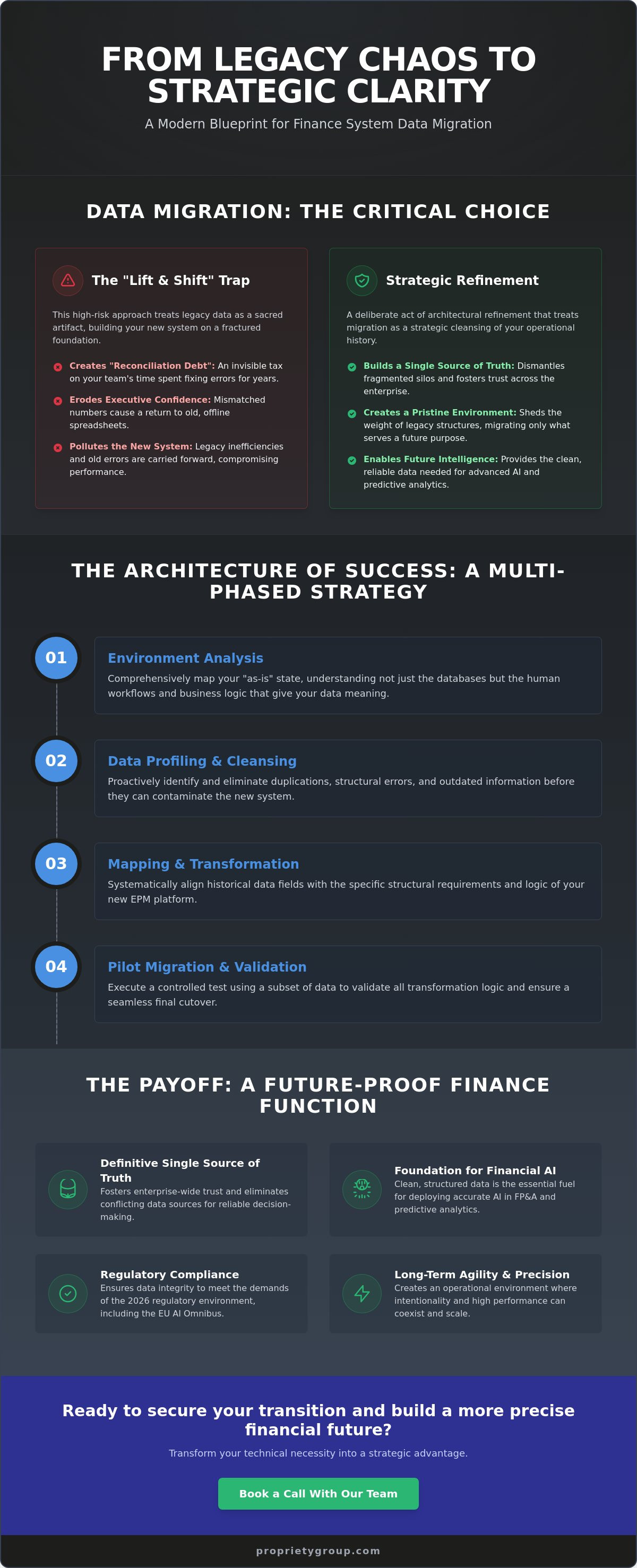
Many organizations fall into the trap of "lift and shift" methodologies. This approach is high-risk because it treats legacy data as a sacred artifact rather than a tool that may no longer be fit for purpose. By importing outdated structures, you're essentially building a house on a fractured foundation. True excellence requires a more intentional approach that prioritizes the long-term security of your financial narrative.
Finance leaders must lead this journey because of a concept known as data gravity. Financial data is heavy; it pulls other processes toward it. If technical teams lead in isolation, the transfer might succeed while the business logic fails. High-quality migration is the only way to ensure the reliability of future AI for FP&A initiatives, where the precision of your input dictates the wisdom of your output.
The Cost of "Dirty" Data in Modern Finance
When data is moved without care, it creates reconciliation debt. This is an invisible tax on your team's time that can last for years as they manually fix errors. It erodes executive confidence. If the numbers don't align immediately, the prestige of the new system is lost, and decision-makers will return to their old, offline spreadsheets. Reliability is the currency of the finance function; don't devalue it during the transition.
Migration as a Strategic Opportunity for Decluttering
We advocate for a zero-based approach to your information. You should only migrate what serves a documented future purpose. This is your chance to dismantle fragmented reporting silos and establish a single source of truth. By removing the noise of the past, you create a digital space where intentionality and performance can coexist. To secure this level of craftsmanship for your organization, book a call with our team.
The Architecture of Success: A Multi-Phased Migration Strategy
A successful data migration strategy for new finance system implementation requires a blueprint that respects the complexity of your current environment while looking toward your future goals. We view this process as a series of deliberate stages, each designed to ensure the integrity and permanence of your records. It's not a race to completion but a steady march toward a more reliable operational standard.
First, a comprehensive environment analysis is essential. You must fully understand your "as-is" state before you can define the "to-be" architecture. This involves more than just identifying database names; it requires understanding the human workflows and business logic that give that data meaning. Second, data profiling and cleansing identify duplications and structural errors before they can contaminate the new system. This step is a critical component of legacy system modernization, ensuring that you don't simply move old problems into a faster environment.
Third, mapping and transformation align your historical data with the specific requirements of your chosen EPM platform. Finally, a pilot migration allows for a controlled test of a data subset. This validates your transformation logic before the full-scale cutover. If you're unsure how to structure these phases for your specific needs, you can speak with our advisory team for tailored guidance.
The Importance of Test-Driven Migration
A trial run is the only way to uncover hidden logic flaws that standard documentation might miss. It's particularly vital when deciding how to handle historical data versus open transactions. While historical records provide essential context, open transactions require a higher level of precision to ensure continuity during the transition. Testing these scenarios early prevents expensive delays during the final go-live window.
Validation: Moving Beyond Technical Totals
Row counts matching between systems isn't a guarantee of data integrity. True validation requires the involvement of business users who understand the operational reality behind the numbers. Their participation ensures that the system isn't just technically functional, but also operationally ready for the first day of use. This collaborative approach builds trust and ensures that the "single source of truth" we discussed earlier is accepted by everyone in the organization.
Future-Proofing Your Finance System: From Data to Intelligence
A successful data migration strategy for new finance system implementation doesn't end when the records are transferred; it begins when those records start to generate insight. We view your migrated data as the high-quality fuel required for sophisticated AI in finance. Without this foundational precision, even the most advanced algorithms will fail to provide the certainty your leadership requires. Clean data is the prerequisite for a visionary finance function.
When you transition with intentionality, you unlock immediate operational advantages. You can move away from static planning and embrace driver-based budgeting and rolling forecasts from the very first day of go-live. This shift transforms your department from a historical record-keeper into a proactive partner. It's about creating enduring value through the alignment of your digital assets and your strategic intent.
Long-term success depends on a commitment to standards of correctness. This is where EPM Advisory plays a vital role; it ensures your architecture remains robust as your business evolves. To maintain this level of excellence, our PG CARE model provides ongoing EPM solution support. This ensures that the integrity you've worked so hard to establish during migration isn't eroded by future complexity. It's a principled approach to system health.
Enabling Predictive Analytics Through Clean Data
A structured migration allows your organization to identify patterns that were previously hidden in fragmented spreadsheets. By centralizing your information, you enable your team to perform real-time stress testing and scenario modeling with absolute confidence. This capability is essential for managing risk and identifying growth opportunities in a volatile market. It's the difference between guessing and knowing.
The Human Element: Training and Adoption
A system is only as effective as the team's ability to trust the data within it. We believe that digital tools must align seamlessly with the human experience. Strategic training during the migration phase reduces friction and accelerates your return on investment. When your team understands the logic behind the new structures, they become active stewards of the system's integrity. To begin building this foundation for your enterprise, book a call with our team.
Securing Your Financial Future Through Precision
The transition to a new system represents a rare moment to redefine your organization's digital standards. By viewing your data migration strategy for new finance system integration as a catalyst for excellence rather than a burden, you ensure that your platform delivers immediate and enduring value. We've explored how a phased architecture and a commitment to data cleansing transform raw information into a sophisticated asset for predictive growth. This process isn't just about moving records; it's about establishing a permanent foundation for intelligence.
Success in this premium sector requires more than just technical execution; it demands a visionary approach to long-term system health. As specialists in EPM and CRM implementation, we understand how to align your technical requirements with your broader human experience. Our bespoke PG Care support model and deep expertise in AI-driven financial intelligence provide the security and reliability your function deserves. To ensure your finance transformation is built on a foundation of precision, book a call with our advisory team today. Your journey toward a more principled and intelligent financial future starts with a single, intentional step.
Frequently Asked Questions
How much historical data should we migrate to the new finance system?
Determining the volume of history to migrate requires a principled look at your future reporting needs. You'll typically find that moving two to three years of granular transactional history and five to seven years of summary data provides a sufficient foundation. This approach ensures you meet regulatory requirements without cluttering your new environment with legacy noise. It's about creating a lean, high-performing digital space for your finance function.
How long does a typical finance data migration take?
A comprehensive data migration strategy for new finance system implementation often spans several months depending on your organization's architectural complexity. This timeframe allows for the rigorous analysis, cleansing, and validation phases that are essential for long-term security. We view this as a steady, measured journey toward a more reliable digital future rather than a rushed event that risks compromising the permanence of your financial records.
Should we clean our data before or after the migration?
You must clean your data before the migration begins to ensure foundational integrity within your new system. Attempting to rectify errors after the transfer's complete often leads to reconciliation debt and erodes user trust in the new platform. By addressing structural inconsistencies early, you create a pristine environment where your financial AI and reporting tools can function with the absolute correctness your leadership team expects.
What is the biggest risk during a finance system data migration?
The most significant risk is the loss of business context and security. Research indicates that 97% of organizations that reported an AI related security incident in 2025 lacked proper AI access controls. To mitigate these risks, finance leaders must maintain active stewardship throughout the process to ensure every record aligns with the strategic intent and security requirements of the new system. To secure your transition, book a call with our team.