
Board Software: A Comprehensive Guide to Modern Decision-Making Tools

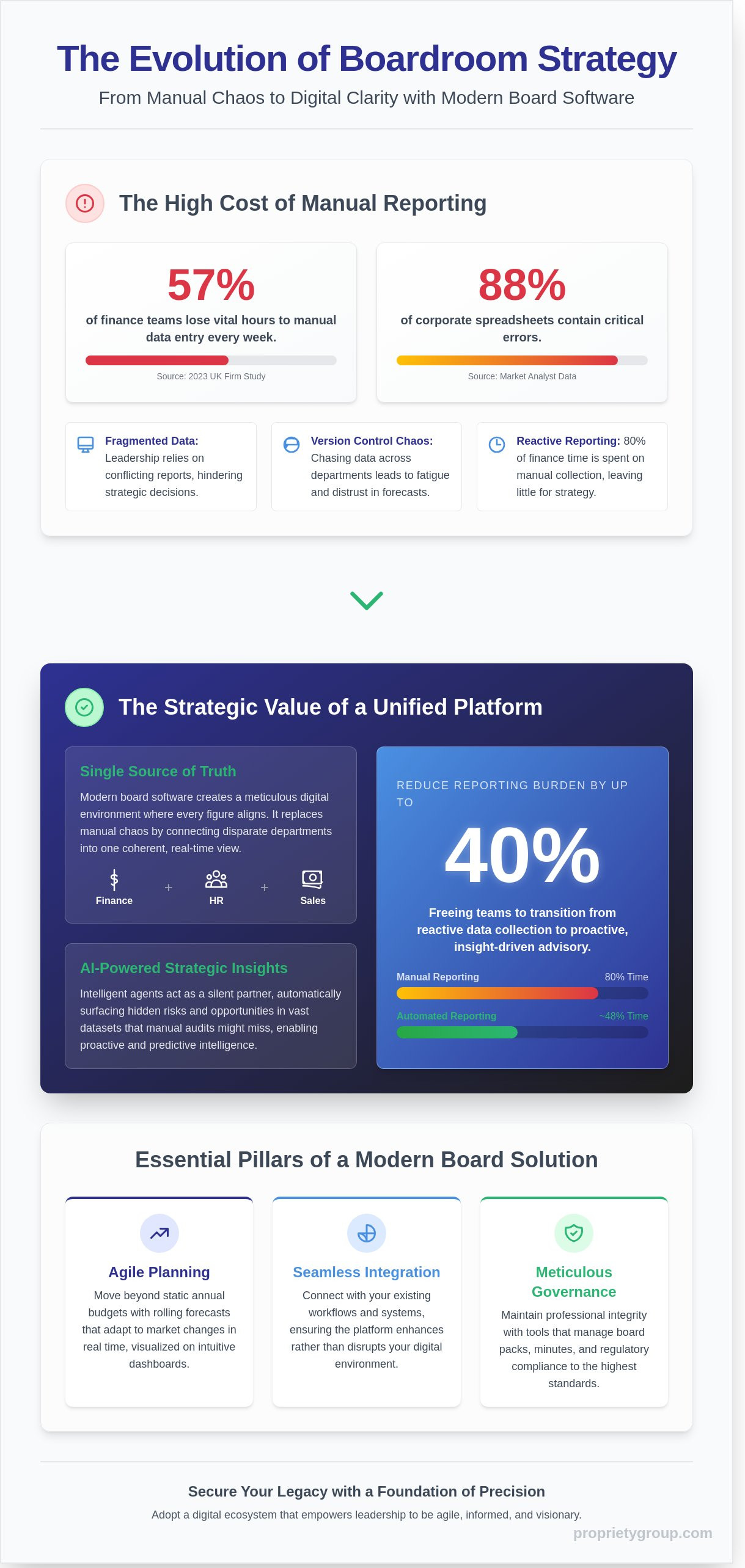
Last Tuesday, a London-based finance director sat in a boardroom surrounded by three conflicting versions of the same quarterly report. This disconnect is a quiet crisis in many UK firms. A 2023 study found that 57% of finance teams still lose vital hours to manual data entry every week. When leadership teams rely on fragmented spreadsheets, the integrity of their strategic decisions suffers. Modern board software has matured beyond simple meeting agendas to become a meticulous engine for strategic planning. It replaces the chaos of manual input with a bespoke digital environment where every figure aligns with a single, verifiable truth.
You likely recognise the fatigue of chasing data across departments just to build a forecast you can trust. It's clear that your time is better spent on visionary leadership than on fixing broken cells in a workbook. This guide explores how the right tools create a legacy of precision by automating reporting and bridging the gap between your financial goals and daily operations. We'll examine the essential features that transform these platforms into pillars of corporate propriety and long-term security.
Key Takeaways
- Move beyond simple administration to adopt a digital ecosystem that integrates your organisational strategy with daily operations.
- Discover how modern board software empowers leadership teams to transition from reactive data collection to proactive, insight-driven advisory.
- Learn to connect disparate departments like finance, HR, and sales into a single, coherent view for more precise long-term planning.
- Identify the essential criteria for selecting a solution that aligns with your company’s bespoke culture and future growth requirements.
- Understand how to implement a platform that maintains meticulous governance while ensuring your leadership remains agile and informed.
Understanding Board Software: Beyond Simple Meeting Management
Board software is a refined digital ecosystem designed to help leadership teams organise information and execute strategy with absolute precision. It represents a shift from the administrative tasks of the past toward a visionary future. By 2026, the most effective UK boards have moved away from merely recording historical data. They now use these tools to predict future trends and safeguard their company's legacy. This transition creates a single source of truth that's vital for maintaining professional integrity in a complex market.
The Two Main Categories of Board Technology
Leadership technology is generally divided into two primary disciplines. Governance portals act as a meticulous archive. They manage board packs, meeting minutes, and regulatory compliance to meet the standards set by the 2024 UK Corporate Governance Code. In contrast, strategic planning platforms serve as a bridge between financial data and operational reality. These systems allow directors to see how a 5% shift in interest rates or a change in market values affects their long-term goals. This clarity helps boards move beyond static reports and engage with live forecasting.
Why Leadership Teams are Moving Away from Spreadsheets
The era of managing high-level strategy through manual spreadsheets is ending. Data from market analysts suggests that 88% of spreadsheets used in corporate environments contain errors. These mistakes create a significant risk for directors who rely on accurate figures for their duties. Modern board software removes the danger of version control issues by ensuring every board member looks at the same real-time data. This level of transparency builds trust and allows leaders to focus on purpose rather than questioning the accuracy of a cell in a document. The move to board software ensures that every decision is grounded in facts that are both current and verified.
The Strategic Value of a Unified Planning and Decision Platform
Modern board software transforms how leadership teams interact with their own data. Finance teams often spend 80% of their time on manual data collection, which leaves little room for high-level strategy. This technology shifts that balance, allowing professionals to move from reactive reporting to proactive advisory roles. By linking sales, HR, and finance into one coherent view, the entire organisation gains a single source of truth. Implementing a unified platform can reduce the month-end reporting burden by as much as 40%, ensuring that decisions are based on current realities rather than month-old figures.
This shift often requires bringing in leaders with the right strategic mindset. For companies aiming to build such high-performing teams, specialist consultancies are invaluable. For instance, Altum Recruitment helps find professionals who excel in these modern financial and legal environments.
Transforming Financial Planning and Analysis
Static annual budgets often fail to keep pace with the UK's shifting economic climate. Agile organisations now rely on rolling forecasts that adapt to market changes in real time. Expert epm advisory provides the framework for these software tools to function, ensuring that the technical setup supports strategic performance. Dashboards play a vital role here, visualising trends through intuitive graphics rather than overwhelming rows of numbers. It's a change that makes complex data accessible to every stakeholder without requiring a background in data science.
The Role of Artificial Intelligence in Modern Boards
Artificial intelligence now acts as a silent partner in the boardroom. Intelligent agents surface hidden risks and opportunities within vast datasets automatically, often identifying patterns that manual audits might overlook. Maintaining integrity is paramount, so these tools are designed to show how they reach their conclusions. Our comprehensive guide on ai in finance explores this broader technological shift towards predictive intelligence. Leaders looking to secure their legacy can partner with us to integrate these sophisticated tools into their long-term vision.
Selecting and Implementing the Right Board Solution for Your Organisation
The most effective board software isn't necessarily the one with the longest list of technical features. It's the platform that mirrors your organisation’s culture and specific objectives. Before committing to a purchase, a meticulous analysis of your current digital environment is vital. This ensures the tool integrates with your existing workflows rather than disrupting them. Evaluation must focus on three pillars: ease of use for directors, seamless integration with current systems, and the ability to scale as your business grows. A 2023 study by the Standish Group suggests that 42% of technology implementations fail because they don't align with the actual day-to-day needs of the users.
Creating a Roadmap for Success
Success begins by identifying the core business problems you need to solve. Are you looking to reduce administrative time or improve the security of sensitive documents? A bespoke implementation plan is essential. Avoid "one-size-fits-all" approaches that ignore your unique governance structure. By focusing on the "why" first, you ensure the software serves your purpose, rather than forcing your team to adapt to rigid, impersonal systems. This strategic clarity prevents wasted investment and ensures the transition is smooth for all stakeholders.
The Value of Expert Advisory and Support
An advisory partner bridges the gap between technical features and meaningful business outcomes. Managed support ensures your board software evolves alongside your organisation, providing a sense of long-term security and integrity. Ongoing training remains the secret to lasting success. It empowers every member to use the tool with confidence, ensuring the system is used to its full potential. This expert-led approach protects your investment and builds a lasting legacy of excellence. Explore how Propriety Group can help you choose and implement the right board software for your future legacy.
Moving Beyond Static Reporting to Strategic Clarity
Modern leadership demands more than just organised meetings; it requires a clear view of the future. Adopting a unified board software solution ensures that your data flows seamlessly from daily operations into high-level strategy. This transition eliminates the guesswork that often hampers executive decisions. Since 2019, Propriety Group has specialised in implementing Enterprise Performance Management and Customer Relationship Management systems that bridge this gap. We focus on precision and long-term value.
Our approach integrates advanced AI and predictive financial analytics to give your leadership team a distinct advantage. Success doesn't end at go-live. It requires meticulous upkeep. Through our subscription-based PG Care model, we provide ongoing system optimisation to ensure your technology evolves alongside your business. You'll find that the right tools, paired with expert guidance, create a legacy of informed and confident decision-making. Discover how our bespoke advisory services can transform your board reporting and strategy. We look forward to helping you build a more resilient and visionary organisation.
Frequently Asked Questions
What is the difference between a board portal and EPM software?
A board portal serves as a dedicated digital space for governance and meeting management, whereas EPM software focuses on financial planning and analysis. While EPM tools handle the granular data of budgeting, board software provides a secure environment for directors to review high-level strategy and give final approvals. This distinction ensures that leadership teams focus on the integrity of their decisions without becoming lost in the complexities of day-to-day accounting operations.
Is board software secure enough for highly confidential financial data?
Modern platforms provide a fortified environment that exceeds standard email security through advanced encryption and strict access controls. Leading providers adhere to international standards such as ISO 27001, which governs how sensitive information is protected. By centralising confidential financial records within a bespoke digital vault, organisations reduce the risk of data leaks that often occur through physical paper trails or unencrypted digital communications.
How long does it typically take to implement a new board software solution?
The transition to a new board software solution typically requires a period of three to six weeks to ensure a meticulous setup. This timeframe includes the initial configuration of the platform, the secure migration of historical documents, and tailored training sessions for all board members. A structured rollout ensures that every director feels confident using the new system, allowing the organisation to maintain its standard of excellence.
Can board software integrate with our existing ERP or accounting systems?
Most sophisticated platforms integrate seamlessly with existing ERP and accounting systems through secure data connections. This connectivity allows financial reports to flow directly into board packs, ensuring that the information presented to directors is both accurate and current. By linking these systems, organisations eliminate the need for manual data entry, which reduces the likelihood of human error and preserves the precision of the firm's financial legacy.